QR Code Ordering for Restaurants: A Practical Rollout Playbook
This article is for operators who want QR code ordering for restaurants that actually speeds up service—not a gimmick that creates confused guests, duplicated tickets, and kitchen chaos.
Key takeaways
- Treat QR ordering as an operational change: menu, floor plan, payments, and kitchen display must align before you print your first tent card.
- Measure success with turn-time, average check, and error rate—not “downloads” or vanity scans.
- Use accessibility and performance best practices from the W3C Web Accessibility Initiative and web.dev so mobile menus work on real devices on real networks.
Table of contents
- When QR ordering pays off
- Six-step rollout
- Mistakes that create guest friction
- Measuring ROI without lying to yourself
- FAQ
- Sources
QR code ordering for restaurants works best when it reduces server trips for order-taking and payment collection—especially in 70–120 seat dining rooms where labour is the constraint. Industry research hubs such as the National Restaurant Association’s research library document how operators continue investing in digital ordering channels; pairing that macro view with your store-level ticket data keeps you honest about whether QR is saving minutes or just shifting work.
Macro data can also help you sanity-check adoption: market statistics providers such as Statista’s technology and retail datasets publish directional views on mobile commerce and QR usage by region—use them for context, not as a substitute for your POS exports. The difference between national trends and your fourth table on the left is where money is won or lost.
When QR ordering pays off
You should prioritise QR self-order when:
- Peak overlap is tight: you routinely run 2+ seatings per table on weekends.
- Modifier complexity is high: proteins, temps, and allergy notes are easier as structured prompts than shouted across the room.
- Payment at table is legal and expected in your market—reducing terminal walks.
Be conservative with claims about “automatic” labour savings: if QR simply moves order entry to guests while expo still manually babysits tickets, your net labour impact may be single-digit minutes per table—not a full headcount cut.
Hospitality analysts at Deloitte’s retail and consumer practice frequently emphasise that digital ordering shifts where work happens—front door, line, table—without automatically removing labour hours. Your job is to redesign service choreography so minutes saved become either higher touch (recommendations, wine pairings) or throughput (faster turns), not invisible slack.

Photo licensed via Unsplash.
Baseline numbers to capture before launch
Track 4 weeks of pre-QR metrics: median turn-time by daypart, average check, void %, and comp %. After launch, compare the same day-of-week bands to control for seasonality—Thursday this month is not comparable to Saturday last month.
Six-step rollout
Step 1 — Menu structure and item logic
Split your menu into scan-friendly sections: 10–14 top-level categories beats 40 tiny SKUs that force endless scrolling. Align modifier naming with kitchen display language so KDS tickets match what cooks expect—see kitchen display system for how screens reduce ambiguity versus handwritten chits.
Step 2 — Table mapping and identity
Every QR journey needs a reliable table id. Decide whether guests type a short code (A12) or scan a unique QR tied to floor-plan coordinates. Mismatches here cause wrong food to wrong table—the fastest way to lose trust. If you run multiple rooms, test Wi-Fi dead zones where guests cannot load pages; 5 GHz backhaul with -70 dBm or better signal at the table is a practical target for smooth mobile sessions.
Step 3 — Payments and receipts
Decide early: pay at table inside the flow vs pay server. Mixed messages create double charges and chargebacks. Align with your processor’s PCI DSS expectations; the PCI Security Standards Council publishes baseline guidance for protecting cardholder data in card-not-present flows.
Step 4 — Staff training and service choreography
Train hosts to set expectations (“Scan to order; we’re here if you want a recommendation”). Train servers to intervene when guests struggle—accessibility matters: follow WAI fundamentals for text sizing and contrast. Run 3 full simulations with real phones (iOS + Android) on 3G throttling so you feel the experience under stress.
Step 5 — Signage and guest education
Tents should answer three questions: what to scan, what happens next, and how to get human help. Add one line about your wifi guest network if page loads stall—2-second perceived delays stack into abandoned orders during 7:00–8:30 p.m. peaks.
Step 6 — Analytics and continuous improvement
Review weekly: scan-to-submit conversion, average items per ticket, and kitchen delay between fire and bump. If QR ordering raises average check by $1.50 per guest with stable turn-time, that is meaningful cash flow—$1.50 × 180 guests × 26 nights is $7,020 per month in a busy neighbourhood concept.
Step 7 — Hardening week (optional but smart)
Schedule a 7-day hardening sprint after soft launch: fix top 10 menu UX issues, tighten modifier defaults, and add server override macros for VIP tables. Teams that skip this step often accumulate “temporary” workarounds—second tablets, manual transfers, verbal repeats—that erase the digital gains inside 14 nights.
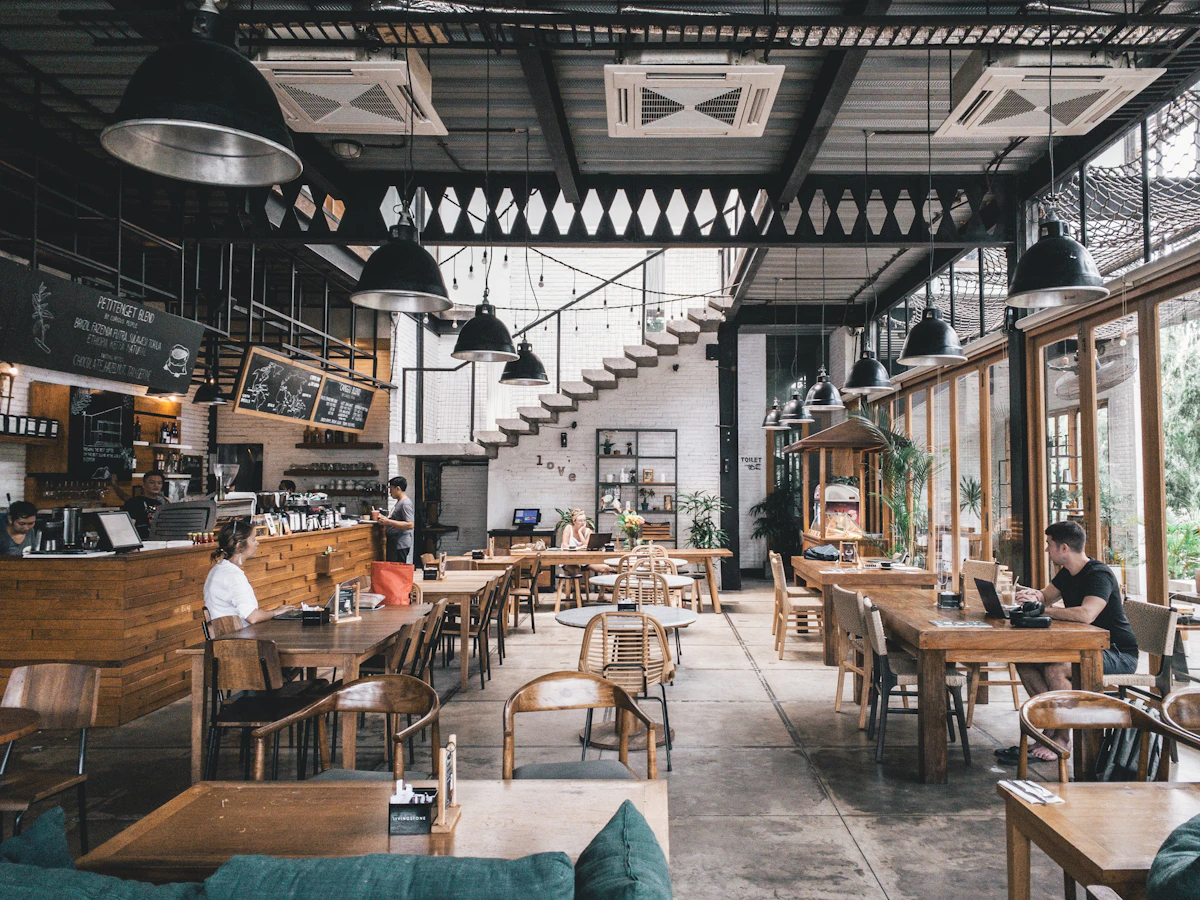
Photo licensed via Unsplash.
Mistakes that create guest friction
- Menus that are PDFs on mobile: slow, pinch-zoom heavy, and hostile to accessibility—see why speed matters for why performance is revenue.
- No server safety net for older guests or large groups splitting bills awkwardly.
- Kitchen overload when QR ordering spikes ticket volume without expo pacing—pair digital ordering with KDS discipline.
- Ignoring WCAG-style basics: if you cannot meet WCAG 2.2 targets, start with contrast, touch targets, and error recovery copy—those three fixes remove most real-world complaints.
Use LightEgg’s QR menu readiness checklist before you go live; it forces you to confront printing, allergens, and service standards in one pass.
Cardholder data and “pay on phone”
If guests pay inside the browser, you inherit questions about PCI DSS scope—tokenization, hosted fields, and who stores receipts. Keep your team aligned with processor documentation and the PCI SSC library; ambiguity here becomes chargebacks and audit stress faster than a bad QR UX.
Daypart playbooks: lunch vs dinner
Lunch rewards speed: shorter copy, 8–12 item lunch sections, and aggressive combo prompts. Aim for ≤45 seconds from scan to submit for a 2-item order—if your flow takes 90 seconds, you will lose office workers regardless of food quality.
Dinner rewards guidance: keep human storytelling—server recommendations—while QR handles reorders and add-ons. A practical split is QR-first for rounds 2+ (“Another round?”) while round 1 stays relationship-led for wine and shared plates.
Groups, splits, and large-party edge cases
Parties of 8+ expose every weakness: split checks, shared items, and service charge lines. Decide whether QR ordering supports per-seat tabs, even splits, or server-only tools for complexity. Announcing a clear policy on the menu page prevents 10 minutes of negotiation at the table—and protects turn-time on busy Fridays.
Measuring ROI without lying to yourself
ROI is not a single number. Build a simple scorecard:
| Metric | Pre-QR baseline | Post-QR target band | | --- | --- | --- | | Median turn-time (minutes) | e.g. 82 | −5–12 | | Labour cost % of sales | e.g. 31% | −0.3–1.0 pts | | Average check | e.g. $42 | +$0.75–$2.50 | | Item error / void % | e.g. 1.1% | ≤ baseline |
If labour does not move but average check rises, you still may justify the programme—especially when QR ordering supports upsell modules and add-ons that are awkward on paper.
How LightEgg fits
LightEgg combines QR ordering with POS, kitchen display, and inventory so digital orders do not live in a silo. Operators in Malaysia should read QR ordering in Malaysia for regional context—language, payments, and floor patterns differ from generic US playbooks.
Pair QR with floor and ticket discipline
Digital ordering amplifies whatever your line already does well. If expo does not throttle apps when the fry station is 6 minutes behind, QR ordering will simply flood the KDS faster—15 tickets in 90 seconds sounds great on a dashboard until the pass melts down. Align QR launch timing with kitchen display training and a realistic item-level capacity model for each daypart.
FAQ
What is QR code ordering for restaurants?
Guests scan a code at the table, browse a mobile menu, and submit orders (sometimes paying) without a server writing the ticket manually—QR code ordering for restaurants connects table identity to your POS and kitchen so fulfilment stays accurate.
Does QR ordering replace servers?
Rarely wholesale. It reallocates time from order entry to hospitality, course pacing, and problem resolution—especially in 90–120 minute turns where relationship selling still matters.
How do you prevent wrong-table delivery?
Bind each QR to a table id, train staff to confirm large orders verbally, and monitor KDS timing so runners do not batch plates before the floor is ready.
What about guests without smartphones?
Keep paper menus and server ordering paths. A blended service model is the norm in full-service—not a failure mode.
How do you keep mobile menus accessible?
Follow WAI guidance on text, contrast, and structure; avoid menu PDFs that cannot be read by screen readers.
What is a realistic scan-to-order conversion rate?
Healthy programmes often land 55–75% of seated guests submitting at least one digital order in QR-forward concepts—lower when you still push server-led selling for wine, and higher in counter-adjacent rooms. Measure conversion by covers, not scans, so double scans do not inflate success.
Sources
- National Restaurant Association — Research
- PCI Security Standards Council
- web.dev — Why speed matters
- W3C WAI — Accessibility fundamentals
- Deloitte — Retail & Distribution Insights
- W3C — WCAG 2.2 Recommendation
- Statista — Market data
- LightEgg — QR ordering
Start with QR ordering and the readiness checklist—then wire kitchen display and POS training so QR code ordering for restaurants becomes a throughput tool, not a novelty.
Appendix: a one-page launch checklist
Print this for the manager stand:
- [ ] Menu QA: allergens, spice levels, 86’d items, and photo accuracy for top 25 sellers
- [ ] Floor QA: every table code maps to the floor plan; dead zones logged with AP adjustments
- [ ] Training: two documented paths—QR-first and server-first—with no shame in either
- [ ] Payments: refund path rehearsed; manager PINs rotated; receipt email templates tested
- [ ] Kitchen: KDS filters by station; all-day counts for apps; fire hold rules for coursed meals
- [ ] Guest recovery: if the page fails, staff can place the order in under 60 seconds on POS without punishing the guest
If you want deeper operational metrics after launch, pair this programme with restaurant metrics thinking—targets should reflect your rent, labour market, and menu complexity, not a generic benchmark from a slide deck.
Closing thought: QR code ordering for restaurants is a front-of-house product, a kitchen product, and a payments product. If you only optimise one layer, you will ship a half-built experience—fast on paper, painful in the dining room.